Showing posts with label Lithuanian language. Show all posts

September 27, 2016

May 9, 2016

This Year's Banquet

Mr. Irene and I just attended the annual banquet hosted by Madison Vilnius Sister Cities, Inc. Our friends V and her husband again joined us for the weekend. It was a great occasion.


The Madison Club once more decorated the tables in the tricolors of the Lithuanian flag.

*     *     *     *     *


This year, Mr. Irene welcomed the guests.

*     *     *     *     *


Guests enjoyed cocktails before the meal. Some of us eat the olives first.

*     *     *     *     *


We had a great turnout.

*     *     *     *     *


The chef is becoming expert at preparing Lithuanian dishes.

*     *     *     *     *


We started out with a favorite: Šaltibarščiai.

*     *     *     *     *


The kitchen remembered to serve the soup with a traditional accompaniment: boiled potatoes.

*     *     *     *     *


Our featured speaker this year was Dr. Audrius Plioplys, creator of the Hope and Spirit exhibit.

May 3, 2016

Babos Receptai (Part 15)

Here's a recipe Tatjana got from her daughter—my Dad's twin sister—Jonė.


 Here's how I translated the recipe:

Streusel Kuchen

Streusel Topping:
1 to 1-1/2 cups flour
1/2 cup granulated sugar
1/4 teaspoon cinnamon
1 stick unsalted butter (not specified in the recipe, but I would add)
1/2 teaspoon vanilla extract 

Cake:
3-1/2 cups all-purpose flour
2 to 2-1/2 teaspoons baking powder (Tatjana probably used one of these)
1/2 teaspoon cinnamon

2 sticks margarine
1 stick butter
1 "cup" granulated sugar
2 eggs
1 teaspoon vanilla extract
1 cup milk 

Marmalade or jam 


Preheat the oven to 400 degrees F and adjust the rack to the center position.

For the Streusel: Mix together the flour, sugar, and cinnamon. Cut in the butter until the mixture is crumbly. Stir in the vanilla. Chill the streusel while you prepare the cake batter.

For the Cake: Sift together the flour, baking powder, and cinnamon. Set aside.


Cream the margarine, butter, and sugar. Add the eggs, one at a time, beating well after each addition. Add the vanilla.

Alternately fold in the sifted dry ingredients and the milk, beginning and ending with the sifted dry ingredients. 

Spread the dough on a greased, flat baking pan (size not specified). Spread some marmalade or jam over the top.

Scatter the streusel over the top of the cake. Bake for about 40 minutes. If the cake is not ready after 40 minutes, then lower the oven temperature to 350 degrees F and bake for another 10 minutes.

April 25, 2016

We like them crispy.

One of our cherished memories of Mr. Irene's Dad was his skill at cooking potato pancakes.  He sometimes made potato pancakes when Mr. Irene, my Mom, and I visited with Mr. Irene's Parents on Sunday afternoons. Potato pancakes therefore spark happy memories.

Lithuanian* potato pancakes ("bulviniai blynai") are unlike latkes: the texture of the potatoes used in the batter must resemble a dense pulp, not shreds of potato. Most people prepare the potatoes for bulviniai blynai by processing them in a potato-grating machine (see also here and here) or, less favorably, in a juicer. A food processor does not achieve the correct texture. Mr. Irene's Dad did not have a potato-grating machine, so he laboriously processed the potatoes by hand on the small holes of a hand grater.

We have a potato-grating machine, and we most often use it to make Kugelis. I've been tweaking a recipe for potato pancakes for over ten years, but I never quite achieved the result we wanted. Last night, we were successful. 


Here is my recipe:
 Potato Pancakes ("Bulviniai Blynai")

3 pounds Idaho or Yukon Gold potatoes (if you don't own a kitchen scale, then get one)

2 egg whites
1/4 teaspoon cream of tartar

2 egg yolks
2 tablespoons sour cream
1/4 teaspoon baking powder
2 tablespoons all-purpose flour
2 teaspoons salt
1/2 teaspoon ground black pepper
about 1 teaspoon "Fruit Fresh" or citric acid (optional; prevents potatoes from oxidizing)

1 medium yellow onion

1 cup peanut oil (for frying)

Sour Cream (for serving)


Fill a large bowl with cold water. Add part of the "Fruit Fresh" and allow to dissolve. Peel potatoes and cut into quarters. Drop potato quarters into the cold water; set aside.

In a medium mixing bowl using a hand mixer, beat the egg whites and cream of tartar on medium speed until frothy. Gradually increase the speed to high and mix until the egg whites are stiff. Set aside.

In another mixing bowl, using the same hand mixer, beat the egg yolks, sour cream, baking powder, flour, salt, and pepper until the egg yolks are pale in color and the mixture is thick. Set aside.

Preheat the oven to 425 degrees. Adjust the oven rack to the center positions. Line two cookies sheets with foil. Lightly spray the foil with vegetable spray. Place a brown grocery bag near the stove top. Cover the bag with a thick layer of paper towels.

Set a fine mesh colander into a large mixing bowl and place the colander/bowl assembly under the spout of a potato-grating machine. Process the potatoes and onions together in the potato-grating machine (people suggest processing the onions with the potato keeps the potatoes from oxidizing). Occasionally sprinkle the grated potatoes with "Fruit Fresh" to prevent oxidizing.

Using a spatula, press the potato pulp against the side of the colander to squeeze out as much liquid as possible (do not drain the liquid yet). Let the liquid stand for about 5 minutes, and save the starch that accumulates at the bottom. Stir the potato pulp into the egg yolk mixture; then add the accumulated potato starch. Fold in the egg whites: incorporate the  whites, but don't deflate them. 

Heat 1/4- to 1/2-inch depth of peanut oil in a large, nonstick, sauté pan over medium-high heat until shimmering but not smoking. Ladle 1/4 cup of the batter into the oil for each blynas. Lightly press down on the batter so the blynai are round and the tops are flat, position the blynai so they are not touching. Make about four blynai at a time. Fry until the bottom is golden brown, about 3-1/2 to 4 minutes. Fry the other side until golden; about 2 to 3 minutes. 

Remove the blynai from the oil and set on the paper-towel lined grocery bag. Allow both sides to exude some of the oil. Transfer the cooked blynai to the prepared cookie sheet(s) and place in the 425 degree oven, uncovered, while you finish frying the rest of the blynai.

Serve immediately with sour cream.

Makes 12 pancakes, serves 3 to 4.

*Yes, Poles, Russians, and Ukrainians follow a similar method for making potato pancakes.

April 2, 2016

Babos Receptai (Part 14)

My paternal Grandmother, Tatjana, baked only a few signature items. She often made (and I still bake) "Babos Pyragas." She also (over)baked Banana Cake. Occasionally, she made Devil's Food cupcakes from scratch. She never frosted the cupcakes, so they were quite dry. (I dislike cupcakes, by the way, because who wants to eat all that hard crust? Isn't it better to eat the soft, moist inside of a cake?)

Here's Tatjana's recipe for the Devil's Food Cupcakes (notice again the chemical formulas):


Here's how I wrote up the recipe:

Devil's Food Cake

(1) First, cream together:
1-1/2 cups granulated sugar
1/2 cup shortening
2 whole eggs

(2) Second, sift together:
 1/2 cup unsweetened cocoa
2 cups all-purpose flour
1/2 teaspoon salt

 (3) Third, stir together:
2 teaspoons baking soda
1/2 cup whole milk
1 cup boiling water
1 teaspoon vanilla

And now add to the (1) sugar/shortening/egg mixture the (2) sifted dry ingredients and (3) the liquid ingredients. Add the dry ingredients in three additions and the liquid ingredients in two additions, beginning and ending with the dry ingredients.

Bake cupcakes for 20 minutes at 350 degrees F.

A cake (Tatjana used a 10-inch tube pan) bakes for about 45 to 55 minutes* at 350 degrees F.

ADDED: A reader tests this recipe.

*Baking time adjusted from the duration I originally had posted.

March 15, 2016

Local Flavor


Madison, Wisconsin, March 15, 2016. A Napoleonas is one of our favorite desserts. When I am too lazy to make it (even the cheater's version), then we order it from Omaha's Lithuanian Bakery.

Word recently spread on Facebook that a local grocery store now carries a version of Lithuanian Bakery's Napoleonas. I've never seen it with strawberry or cherry filling (apricot is the usual), but we look forward to trying it.

March 11, 2016

Restoration Day


Madison, Wisconsin, March 2016. Lithuania today celebrates the anniversary of its independence from the Soviet Union. This poster, from the Lithuanian Parliament ("Sajudis") addresses the April 14, 1990 referendum.

February 16, 2016

An Independence Day "Minejimas"

Today, February 16, is Lithuanian Independence Day. The holiday celebrates Lithuania's independence, in 1918, from the Russian Empire. Now, of course, there is a second Independence Day—a restoration day—marking the day Lithuania broke from the Soviet Union in 1991.

Lithuanians recognize both days. Traditionally, groups host a "Minejimas," or commemoration, filled with speeches, poetry recitations, music, and dancing. 

Here in Madison, Madison-Vilnius Sister Cities, Inc. organized a similar reception. We gathered at the Central Madison Public Library. We ate some goodies (I baked a Trupininis Pyragas), and then Nijole shared a presentation about the history of the Žaibas Dance Group. Žaibas this year celebrates its twenty-fifth anniversary.


Madison, Wisconsin, February 14, 2016. The library offered a beautiful room for the gathering.
 
*     *     *     *     *


Nijole created a display featuring items from Žaibas's history (yes, the group danced at a festival in Japan. And in Argentina).
 
*     *     *     *     *


Ah, "[w]e were so much younger then."
 
*     *     *     *     *


We chatted before the program.

*     *     *     *     *


We stood for the Lithuanian National Anthem. No one had an excuse for not knowing the lyrics.

*     *     *     *     *


Nijole began her presentation.
 
*     *     *     *     *

  
Current and former Žaibas dancers rose to applause.
 
*     *     *     *     *


Nijole spoke about the history of folk dancing, especially among the Displaced Persons living in postwar camps. You may have seen this photo earlier.
 
*     *      *     *     *


And this one, too.

*     *     *     *     *


We have a great group! 

February 7, 2016

January 20, 2016

December 13, 2015

The Madison Kūčios Celebration

Madison-Vilnius Sister Cities, Inc. and the Madison-area folk dance group, Žaibas, hosted its annual Kūčios gathering yesterday. It's a lovely event, and folks arrive from around the state to celebrate the occasion.


Madison, Wisconsin, December 12, 2015. Each table featured a plate of plotkelės.

*     *     *     *     *


Madison, Wisconsin, December 12, 2015. It's a potluck affair. I made Christmas Fish. (See menu items and recipes here and here and here.)

*     *     *     *     *


Madison, Wisconsin, December 12, 2015. We had several delicious herring dishes.

*     *     *     *     *


Madison, Wisconsin, December 12, 2015. That's my (first) plate. My favorite dish was the "Herring Under a Fur Coat."

*     *     *     *     *


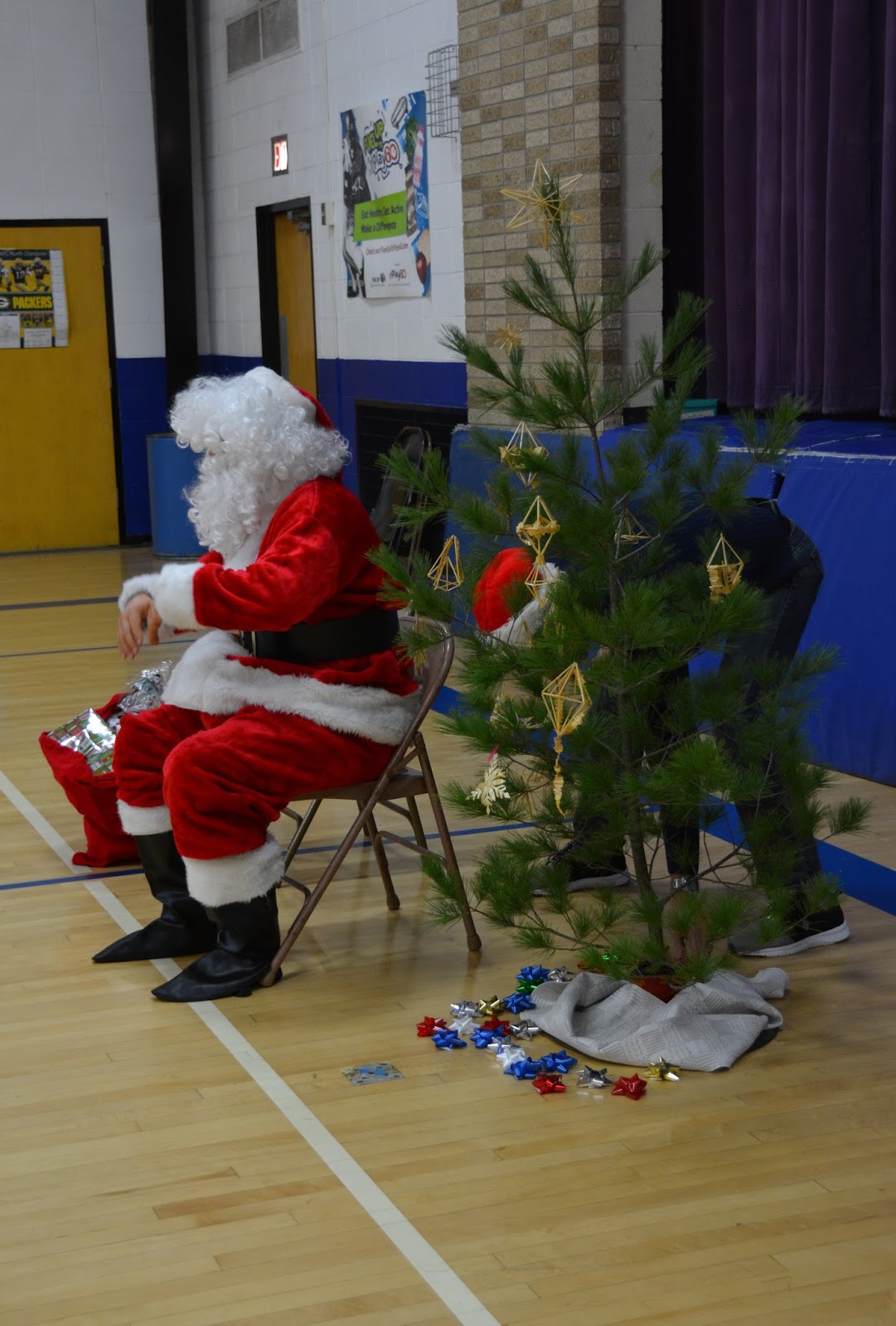
Madison, Wisconsin, December 12, 2015. Santa arrives!

*     *     *     *     *


Madison, Wisconsin, December 12, 2015. Santa engages the children in the "Jurgelis Meistrelis" dance. Santa had push-ups on the mind.

*     *     *     *     *


Madison, Wisconsin, December 12, 2015. This Santa was so good that even his children didn't recognize him.

*     *     *     *     *


Madison, Wisconsin, December 12, 2015. Santa had a tree decorated with straw ornaments.

*     *     *     *     *


Madison, Wisconsin, December 12, 2015. Finally, it's time for the gifts!

*     *     *     *    *


Madison, Wisconsin, December 12, 2015. Aww, bless.

*     *     *     *    *


Madison, Wisconsin, December 12, 2015. There's no free gift for the older children: each must recite a poem or perform a song before Santa passes along the prize.

December 9, 2015

Christmas Manners: Dance with Santa


Suburban Chicago, December 1964. The children from our Lithuanian school join in another round of "Jurgelis Meistrelis." I'm the girl with the eyeglasses; my friend Kris wears a plaid skirt and faces the camera.

November 15, 2015

Exchanging Portraits (Part 55)


*     *     *     *     *


Leipzig, Germany, December 13, 1944. My Mom's friend wrote:
Oh how we could use some luck,
if only a little
if only as much as
the blooming flower on the window ...
The friend's imagery derives from a winter incident Mom recalls. The barracks in which Mom stayed had no central heating.* Mom kept a vase on the window sill. Once, although the water in the vase froze overnight, the flower kept blooming.

*Mom would heat an iron before going to sleep, and she placed it on the mattress so the bedding warmed.

November 1, 2015

All Saints Day


Kaunas, Lithuania, November 1, 1958. A relative sent this snapshot of my paternal Grandfather's grave. The family member noted she took the photo on All Saints Day.

The letters "A.A." stand for "Amžina Atsilsi," or "Eternal Rest." Lithuanians use the phrase to show respect for the deceased. A Lithuanian customarily says "Amžina Atsilsi" before uttering the name of a dead person. So, for example, were I to refer to my paternal Grandmother in conversation, I would say, "Amžina Atsilsi Tatjana."

October 26, 2015

The waiting began.


*     *     *     *     *


Seligenstadt, Germany, August 15, 1945. This is the card with which my paternal Grandmother, Tatjana, registered her intent to emigrate from postwar Germany. She sailed to New York three years later.

(Note that Tatjana recorded Lithuanian as her dominant language.)