Showing posts with label Tauragė. Show all posts

June 12, 2016

A Closer Look (Part 71)


Tauragė, Lithuania, about 1905. This is my Mom's paternal Grandmother, Wanda. Mom remembers Wanda always wore gold-hoop earrings.

Here's the original post.

January 25, 2016

January 16, 2016

December 13, 2015

The Madison Kūčios Celebration

Madison-Vilnius Sister Cities, Inc. and the Madison-area folk dance group, Žaibas, hosted its annual Kūčios gathering yesterday. It's a lovely event, and folks arrive from around the state to celebrate the occasion.


Madison, Wisconsin, December 12, 2015. Each table featured a plate of plotkelės.

*     *     *     *     *


Madison, Wisconsin, December 12, 2015. It's a potluck affair. I made Christmas Fish. (See menu items and recipes here and here and here.)

*     *     *     *     *


Madison, Wisconsin, December 12, 2015. We had several delicious herring dishes.

*     *     *     *     *


Madison, Wisconsin, December 12, 2015. That's my (first) plate. My favorite dish was the "Herring Under a Fur Coat."

*     *     *     *     *


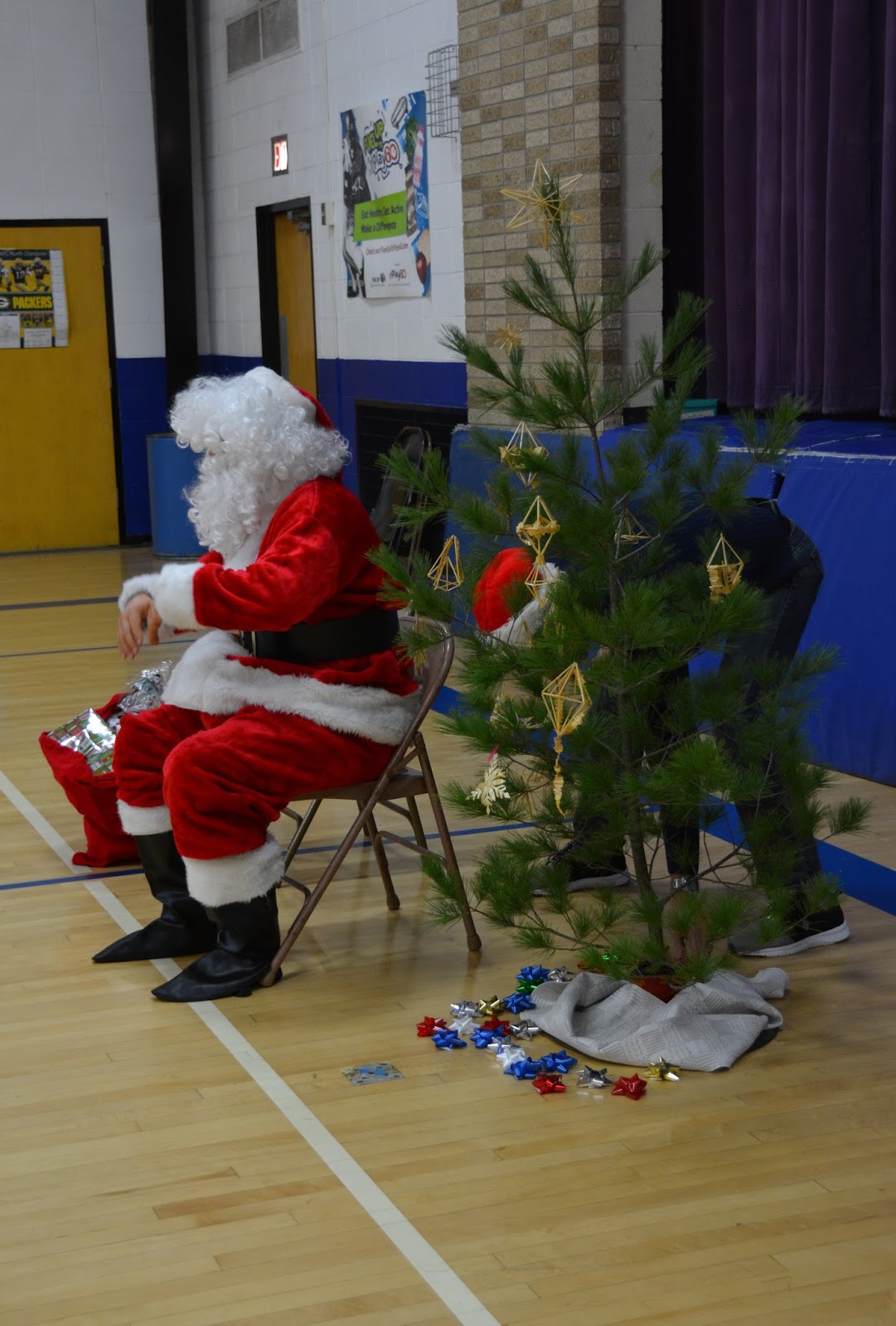
Madison, Wisconsin, December 12, 2015. Santa arrives!

*     *     *     *     *


Madison, Wisconsin, December 12, 2015. Santa engages the children in the "Jurgelis Meistrelis" dance. Santa had push-ups on the mind.

*     *     *     *     *


Madison, Wisconsin, December 12, 2015. This Santa was so good that even his children didn't recognize him.

*     *     *     *     *


Madison, Wisconsin, December 12, 2015. Santa had a tree decorated with straw ornaments.

*     *     *     *     *


Madison, Wisconsin, December 12, 2015. Finally, it's time for the gifts!

*     *     *     *    *


Madison, Wisconsin, December 12, 2015. Aww, bless.

*     *     *     *    *


Madison, Wisconsin, December 12, 2015. There's no free gift for the older children: each must recite a poem or perform a song before Santa passes along the prize.

August 25, 2015

Caption


*     *     *     *     *


Tauragė, Lithuania, about 1940. One of my Mom's younger cousins describes himself.

This fellow was part of the group that left Lithuania together.

April 13, 2014

Sunday, at the Oak


Near Tauragė, Lithuania, about 1940 or 1941.  My Dad's two friends rest during a visit, I believe, to Raudonė Castle. The women may be sitting next to the Gediminas Oak.

(On the other hand, they may be here instead.)

March 12, 2014

There are ethnic Russians living in Lithuania, too.

Anonymous petition asks residents of Klaipėda "to approve the region's accession to the Russian Federation."

ADDED: Here's a map showing the distribution of ethnic Russians in the Baltic States.

May 18, 2013

Keepsake

When my Mom and her Father, Jake, decided to leave Kaunas, they traveled to the city of Tauragė. They hoped the Soviet army would retreat. The pair had only brought a few items with them to Tauragė because no one believed the Soviets would prevail. When it became clear that the Soviets weren't going to retreat, Jake briefly went back to the family home in Kaunas. He thought he might collect a few more personal belongings that he and Mom could take when they fled to the west.

When Jake got to the house, little remained. Most valuables had been buried in the countryside. Soldiers had looted most everything that hadn't been hidden. Jake, however, found one thing he thought Mom would like to keep. The item was a small landscape that Heddy—the wife of Jake's younger brother, Zigmas—had needlepointed in the 1930s for Mom. Mom carried the piece with her to Germany, and she's had it ever since. 

For many years, the needlepoint hung in the Door County cottage, and now, it's back with us again:


March 23, 2013

August 8, 2012

Snapshot with the Staff


Tauragė, Lithuania, about 1929. My Mom's paternal Grandfather, Cody Sr., worked at the Customs House on the border between Lithuania and East Prussia/Germany. Here he stands, in the center and wearing a suit, with his staff.

Thanks to my "Very New" Cousin for making this photo available to us.

March 14, 2012

Related by Marriage: The Extended Family

Mr. Irene's Maternal Grandmother, Anna, and her Sister, Petra, emigrated to the United States as young women. They left behind Parents Agnes and Jacob, and Sisters Emily and Marta.

Contact with the family back in Lithuania was sporadic because of the expense of sending letters and the slow delivery of mail. A holiday greeting, like an Easter card, occasionally arrived. Anna and Petra, for example, also got word when Emily became engaged to Adam J.

The family back home also sent wedding photos and snapshots of the extended family, when they got together. Here is one such image:

 
Near Tauragė, Lithuania, about 1915. This may be the wedding celebration of Anna's sister, Emily. She stands, in the light dress, on the far left, next to Adam J., who, like the other men, wears a boutonniere. Emily's sister Marta is next to Adam J. Agnes, the mother of the young women—and the mother of immigrants Anna and Petra—sits in the center of the babushka group, smiling gently.
 
The other folks are Adam J.'s relatives. Agnes's husband, Jacob, does not appear in this photo.

March 3, 2012

Related by Marriage: Meet the New Officer


Southwestern Lithuania, about 1914. We don't know much about Adam J., except that he married Emily, one of the non-emigrating sisters of Mr. Irene's maternal Grandmother, Anna. Adam J. and Emily lived out their lives in Lithuania.

March 2, 2012

The Decision to Leave

During the Summer of 1944, the Soviet Union pushed west and launched its "annexation occupation" of the Baltic States. By mid-July of that year, my Mom and my paternal Grandfather, Jake, could hear the bomb blasts approaching their home town of Kaunas.

Mom and Jake packed two suitcases and decided to wait out the Soviet invasion—which they believed would be brief—in the border city of Tauragė. They gathered a few belongings. Mom bartered a bicycle in exchange for a wagon. They then hitchiked to Tauragė, where Jake's Parents, Cody Sr. and Wanda, had lived.

Mom and Jake remained in Tauragė during the last two weeks of July 1944, hoping that the Soviet Army would retreat. The two stayed with the family of Jake's cousin, who lived on the second floor of the old, Cody Sr., house. They buried most valuables they had in the countryside. When the Russians continued to move westward, the families—Mom, Jake, and Jake's cousin's brood—decided to leave Lithuania. They headed together to the train station and began their lives as refugees.

Notably, in the ensuing year, Tauragė became the precise region in which in Soviet Army would claim victory over the Germans.


Tauragė, Lithuania, between July 14 and July 31, 1944. My Mom poses with the wife of Jake's cousin. This is one of the last three photos taken of Mom while she was still on Lithuanian soil.

December 13, 2011

Death and Funerals

I am not a cultural historian. I have, however, spent most of my life straddling two—and sometimes three—cultures. I've naturally made all sorts of observations. One of the ways in which Lithuanian culture differs from American culture is in its approach to death.

Although funerals are somber occasions in Lithuania, Lithuanians don't find funerals "creepy." They are occasions—passages—deserving documentation. For example, I grew up surrounded by people who took photographs at funerals. There are open-casket, wake snapshots of most of my Grandparents. When my Mom's maternal Aunt, Dora, died in 1992, Mom received a stack of color photos of Dora resting in her coffin, dressed in baby-blue satin and graced with an opulent jabot.

Lithuanians still visit graves and take snapshots of themselves standing next to family headstones.

I've mentioned this pattern of photographing the dead (and buried) to several friends. Some compare the custom to the early creation of death masks. Others speculate that people photographed the dead because of economics: photographs were expensive, and a burial photo might be the only snapshot that would commemorate a person's life. Still others assumed that a death photo was reasonable in an era when photographic technology was primitive: it was difficult for subjects to sit still through a photograph, and a corpse wouldn't even twinge during that prolonged process.

I was sifting these thoughts when I debated whether to publish the photograph of the funeral of my Mom's paternal Grandfather, Cody Sr. I decided to write this post after discussing the subject with my Toronto Cousin. She thought the photo underscores the different ways we approach death.

Consider that a reliable resource for Lithuanian Customs and Traditions lists funerals in the category of "Family Celebrations." It's customary in Lithuania, for instance, to bring children to a funeral. Whereas we "celebrate" Halloween in the States, the Festival of All Saints—November 1—is the real holiday in Europe. My Mom recalls how families gathered in the cemeteries on that day, covering the graves of loved ones with chrysanthemums. People lit candles, and by the end of the day, the cemetery would look like a rock concert awaiting an encore. When I lived in Venice, families traveled to the cemetery island of San Michele to remember the dead. In Venice, the holiday of All Saints consumed nearly a week.

The cemetery in Lithuania is a comfortable place. My paternal Grandmother, Tatjana, once fell asleep behind the locked gates of one. Upon her exit the next morning, she reported that she felt very comfortable, as though "in her own skin," while there. My Mom and my maternal Grandfather, Jake, spent a number of nights in a mausoleum when they were refugees.

There are two versions of how Cody Sr. died. My Mom's account explains that Cody left his Tauragė home and hid from the advancing Soviet forces in a country location. Because he was a prominent, middle-class government worker , Cody rightly feared that if stayed in Tauragė, he would be deported to Siberia. When the appendicitis struck, Cody's remote, primitive hideaway made it difficult for him to get medical help.

The other account maintains that Cody Sr. did not leave Tauragė. Instead, a competent doctor came to treat Cody. The doctor, a family friend, saw Cody's condition and decided he'd be better off dead than see his country unravel under Communist rule.

The twists between the two narratives make little difference to me. In both versions, Cody Sr. died because of untreated appendicitis, and in both accounts, he failed to receive life-saving surgery because the Soviets had just occupied Lithuania.

And so here is Cody Sr., surrounded by his family, his friends and colleagues, his servants, and the people of Tauragė. His wife, Wanda, clutches her hands in disbelief. She would be dead sixteen weeks later.


Tauragė, Lithuania, October 1940. Churchgoers ready to follow Cody Sr.'s casket to its burial place. My maternal Grandfather, Jake, stands to the left of the grieving Wanda.  Cody's daughter, Mary, is to the right of Wanda, and next to her is her brother, Zigmas. My Mom stands directly behind Mary, partially concealed by Mary's hat.

*     *     *     *     *

Thanks to my Toronto Cousin, and, of course, to my "New" Cousin, for providing the reflections and narratives that made this post possible.

December 10, 2011

Related by Marriage: Greetings from the Old Country

Mr. Irene's maternal Grandmother, Anna, was one of four daughters born to a modest couple who lived in southwestern Lithuania. We don't know the precise location of the homestead, but we believe it was an area on the Lithuanian-Prussian border because the family surname dervied from a German word.

In 1910, Anna and one of her sisters, Petra, emigrated to the United States. We are not sure why they left Lithuania. Anna settled in Philadelphia, where she lived with an upper middle-class family. We assume she worked for the family as a domestic. In 1915, Anna and Petra moved to Chicago, where they settled in Bridgeport, on the South Side. The young women assimilated fluidly into American culture.

Anna married Stanley in 1917, but her sister Petra remained single.

Anna and Petra remained in close touch with their parents and the two sisters, Emily and Marta, who had stayed behind in Lithuania:


Southwestern Lithuania, around 1912. The Parents of Mr. Irene's maternal Grandmother, Anna, sit with the two daughters who did not emigrate to the United States. Left to right: Anna's Sister Emily, Anna's Mother Agnes, Anna's Father Jacob, and Anna's Sister Marta.

November 24, 2011

Giving Thanks

"Why is everyone so sad in this photo?" That's what I asked my Mom when I saw this tiny print.

This is the photo taken as my Mom and my maternal Grandfather, Jake, prepared to flee Lithuania. Surrounding them are more distant relatives; some of them got out, others did not.

Behind this group stands the train that transported refugees from Lithuania on a two-week trip to freedom. My Mom and Jake road in one of the cattle cars that is visible behind them. Food was scarce during the trip. The refugees jumped off the train during its periodic stops, and they searched fields adjacent to the tracks for potatoes and cabbage.

Like most people who left Lithuania, Mom and Jake thought they would return in a few weeks. No one believed the Soviet invasion would mushroom into a permanent occupation.

On Thanksgiving Day, I am grateful Mom and my Dad made it out. I am happy to have arrived at the happier stage of their "journey." After all, I would not have been a compliant citizen in the Lithuanian Soviet Socialist Republic!


Tauragė, Lithuania, July 31, 1944. My Mom, in the print dress, stand with her father Jake—wearing the cap, in the back row—and Jake's cousins as they board the refugee train. My Mom wrote on the back of this snapshot, "The last hours in Lithuania."

UPDATE (1): This photo was taken a few weeks later, when Mom and Jake emerged from the train. Mom is walking with a few of the other Lithuanians who traveled with her. She's wearing the same dress as the one she had on when she departed.

UPDATE (2): My Mom just added a correction here. The city from which the train departed was Tauragė, not Kaunas. I've updated the location in the photo description and in the tags.

November 21, 2011

The Delta of the Nemunas River

My Mom's paternal Grandfather, Cody Sr., worked in the Customs House in the city of Tauragė, Lithuania. His children often visited Cody and his wife, Wanda, at their home in the border town.

Mom frequently summered near that house, in the small city of Panemunė. Cody Sr. kept a rowboat in Panemunė along the banks of the Nemunas River. My maternal Grandmother, Jadzė, enjoyed taking my Mom out on the river in that little boat. Jadzė packed a lunch, and she and Mom would row out to a sandbar, where they swam, tossed a ball in the water, and picnicked.


Nemunas Delta Region, Panemunė, Lithuania, about 1927. Jadzė and my Mom get ready to row out onto the river. 
*     *     *     *     *

Whenever I hear this story, I think of the Wisconsin River, the sandbars along it near Spring Green, and the dangerous undertow of the current!

I have always had a visceral fear of bodies of water, so this does not seem like "fun" to me.


 Nemunas Delta Region, Panemunė, Lithuania, about 1927. Mom enjoys the river.

*     *     *     *     *

Mom still marvels at the beauty of that part of Lithuania. I learned recently that it makes up the delta of the Nemunas River.

Today, the area lies within the Nemunas Delta Regional Park, and it is a destination for eco-tourists.

November 12, 2011

The Things Around You

When we look at old photos, the first things we usually notice are the fashions. We check out the clothing people wore, we recognize hairstyles, and we pay attention to furniture.

Consider the fashion of photography itself. Today it's trendy to do a photoshoot on train tracks. It's cool to "trash the dress." It's adorable to dress dogs as though they were babies.

We know that at the turn of the century, photographers had velvet chairs and tassled props in their studios. Photos taken in those environments have appeared here.

But looking back through our old photos, I see a trend in the family snapshots. People took photographs on front steps, back steps, porches, landings, entry areas, and in doorways.

Was this scene creation a contrived memorialization designed to show that the subjects were homeowners who had arrived at their place in the world? Or was it less conscious, instead illustrating the subjects' attachments to their homes and surroundings?


Tauragė, Lithuania, about 1938. My maternal Grandfather, Jake (in uniform), stands next to his sister, Mary (in the white-fringed shawl), and his Parents, Cody Sr. and Wanda. Mary's Husband and son lean against the railing.

Thanks to my "New" Cousin for making this photo available to me in digital format.