Showing posts sorted by relevance for query Kūčios. Sort by date Show all posts

December 24, 2012

Empty-Nester Kūčios

My Parents celebrated Kūčios alone in 1983. I lived in Venice that year, and I did not travel home to the States for the holiday. Chicago also experienced a record cold spell during Christmas week, and other family members were not able to spend Kūčios with my Mom and Dad. Many people didn't want to leave their homes for fear that the power would go out and water pipes—especially in homes with hot water heat—would freeze.


Suburban Chicago, December 24, 1983. Mom and Dad start Kūčios by breaking the plotkelės.

*     *     *     *     *


Suburban Chicago, December 24, 1983. Meškė joins Mom and Dad at the Kūčios table.

September 28, 2011

Customs

When I was growing up, I learned about holiday customs. Lithuanians, for example, celebrate Christmas on the night of Christmas Eve ("Kūčios"). The Kūčios meal consists of twelve meatless dishes, one to represent each of the Apostles. All of the foods are cold dishes so that the hostess does not have to cook on such a solemn day. On Christmas Eve, we primarily eat vegetable salads, gefilte fish, and marinated herrings. Lots of herring: herring is served at least four ways.

Enforcement of these traditions is inflexible. During one memorable Christmas Eve, we had a guest who did not eat fish. Cold fish therefore was out of the question. My Mom roasted and served a duck. My Dad spit bullets about the breach of Kūčios protocol. Even now, over thirty years later, my Mom usually says on Kūčios, "Do you remember when I roasted a duck on Kūčios?!!" as if that were a really screwball, Lucille Ball-like, thing to do.

Today, rigid food-pairing rules still affect daily meals. For example, if one is serving meatloaf ("Zuikis"), it's not appropriate to offer peas or carrots alongside it. The traditional side dish for meatloaf is a bowl of hot, shredded beets spiked with vinegar and macerated in sour cream. Roast duck is stuffed with apples and served with hot, braised sauerkraut. Roast turkey is stuffed not with stuffing but with prunes—or as they say today, "dried plums." A sauté of cabbage, bacon, and onions must be served with potatoes; never rice. Cold Beet Soup arrives with a side of a hot, peeled, boiled potato sprinkled with fresh dill.

There are also unbending seasonal rules. A "winter salad" consisting of navy beans and beets would never include a spring or summer ingredient, like peas, carrots, or dill. A "spring salad"—similar to the Italian Insalata Russa or the Russian Salat Olivier—would not feature a winter ingredient, like a dill pickle, an apple, or beans.

Strict food rules make the timing of this photo easy to identify. The food on the table tells me that this is an image of Easter dinner. Cooked young birds, veal, and a "Tree Cake" ("Šakotis" or, in parts of Lithuania, "Baumkuchenas") all say "Spring."

The clock in the photo reads 9:00. It looks like it is dark outside. Can the family be eating late? Or is it morning? Mr. Irene thinks it's a mid-day meal for a family that might have attended a Resurrection Mass. Or is the clock broken?

Whose portrait hangs on the wall?

It must have been a rather warm spring day because a window is open.

Some things in this image are familiar. The curtains mimic the sleeves of Lithuanian folkdress blouses: linen with woven, decorative sashes running in horizontal lines. Even though the photo is black and white, the potted primroses on the table might as well be fuchsia with yellow eyes. I look at the edge of the tablecloth and think that it, too, is certainly linen because it looks like someone had trouble ironing it.

Thanks to my "New" Cousin for making this photo available to me in digital format.


Tauragė, Lithuania, probably about 1935 or so. This is the family of my paternal Grandfather, Jake. Jake sits, in uniform, on the far right. To his right is his mother (my Great-Grandmother, Wanda), and behind him are his brother and sister. Jake's niece and brother-in-law stand next to his sister. Seated on the left are Jake's nephew and his father (my Great-Grandfather, Cody Sr.).

December 10, 2012

An Early Kūčios, with Friends

Mr. Irene and I were delighted recently to have been invited to a lovely Kūčios potluck. Madison-Vilnius Sister Cities, Inc. and the Lithuanian folk dance group with which we used to perform—Žaibas—hosted the event.


Madison, Wisconsin, December 2012. Each table featured a plate of plotkelės that diners shared before the meal.

*     *     *     *     *


Madison, Wisconsin, December 2012. The spread included nearly every traditional Kūčios dish: herring, mushrooms, "Vinegretai," "Christmas Fish" (two ways!), smoked fishes, and Lithuanian bread.  (Compare our Kūčios table from last year.)

*     *     *     *     *


Madison, Wisconsin, December 2012. After dinner, Santa Claus arrived with gifts for those children who were ready to sing, play an instrument, or recite a poem.

*     *     *     *     *


Madison, Wisconsin, December 2012. Santa broke into a swoosh of Jurgelis Meistrelis moments after he arrived.

*     *     *     *     *

Do you want to learn more about Kūčios? Check out these posts.

December 18, 2011

Preparing for Christmas Eve (Kūčios)

An historical summary of Kūčios traditions appears here. I posted a few memories of Kūčios earlier.

A narrative about modern Kūčios celebrations is here.

We have lots of herring in the refrigerator right now, ready to be dressed with mushrooms, onions, and tomato sauces.

December 16, 2011

Cheer up everybody; Kūčios is almost here.

Kūčios, or Christmas Eve, is a magical time of traditions and love. Santa Claus delivers gifts to Lithuanian children on the evening of Kūčios because Lithuanian boys and girls are extra special.


Mariampolis, Lithuania, December 24, 1936. Kūčios evening. My Mom, with braids, holds a doll outfitted in folkdress. That doll likely was her Christmas gift that year. Seated from left to right are my maternal Grandfather Jake, my Mom's maternal Grandfather Silvestras, my Mom's maternal Aunt Dora, my Mom's maternal Grandmother Zigmunta, and my Maternal Grandmother Jadzė.

Zigmunta is holding "Pupsikas," her little fawn Chihuahua dog. 

December 17, 2012

Recipes in Translation

Preparations for our little Kūčios are under way. I searched today for plotkelės ("Opłateki" in Polish) at our local Russian store. The shopkeeper had never heard of them; I suppose it's not a Russian Orthodox tradition. She looked at me as if I were speaking Greek when I described the wafers.

I also am tweaking the "Christmas Fish" recipe. This is a preparation of a white fish and sliced onions layered in a thick tomato sauce. It's served cold, like the other foods we eat on Christmas Eve. I've made it for many years, but I have not been satisfied with my recipe, especially after tasting two delicious variations served recently at our local, Madison Kūčios. I've received a couple of recipes to try, and a search today revealed our "Christmas Fish" is a close cousin to Poland's "Fish in the Greek Style." Who knew!

Every Kūčios, Mom and I prepare two "Vinegretai," or mixed vegetable salads. One is a "pink" salad made with beets and navy beans. The other is a "white" salad made with potatoes, peas, and carrots. Our family always called the latter "Babos Vinegretas," or "Grandma's Salad," in honor of my Russian-born, paternal Grandmother, Tatjana. When I moved to Venice in the early 1980s, I noticed that most delicatessens carried a dish that looked identical to "Babos Vinegretas." The Italians call it "Insalata Russa," and it's a modification of a classic Russian dish, "Salat Olivyeh." Iranians make "Salad Oliveh," too. Sources attribute the recipe to a nineteenth-century French chef who lived in the Russian empire. Ah! I had thought Tatjana was the genius behind the dish.

This year, we also will be making a spicy carrot salad, "Aštrios Morkų Salotos." I stumbled on the dish when I bought this product (scroll down to the fourteenth jar on the page) at our Russian store. The salad is identical to a spicy carrot salad that the Russians call Korean Carrots. Russians incorporated the dish into their cuisine after those Koreans deported by Stalin began living in the western Soviet Union. Today, every Russian grocer carries Korean Carrots. At our shop, you can buy the bottled salad (made in Lithuania), a fresh salad in the deli case, or a spice packet to make the salad at home.

That got me back to thinking about the Napoleonas, the torte French pastry chefs adapted from Lithuanian bakers.

Lithuanians, Poles, Russians, Greeks, Italians, Iranians, Koreans, French: it's all one big table.


Verona, Wisconsin, March 2011. The "pink" salad of beets and beans is on the menu. (Photo by Laurence Meade.)

UPDATE: I've corrected a grammatical error in the first paragraph. *Blushes.*

December 24, 2012

It's Kūčios!

"Kūčios," or Christmas Eve, is the day Lithuanians celebrate Christmas. I first wrote about the holiday here, but if you want to read more about our Christmas Eve traditions, then click on the "Kūčios" label.

Or read this charming reflection by Daiva Markelis, who—like me—is a first-generation Lithuanian raised in the Chicago area.

The Christmas Fish is made, and I am happy with this year's results.

December 13, 2015

The Madison Kūčios Celebration

Madison-Vilnius Sister Cities, Inc. and the Madison-area folk dance group, Žaibas, hosted its annual Kūčios gathering yesterday. It's a lovely event, and folks arrive from around the state to celebrate the occasion.


Madison, Wisconsin, December 12, 2015. Each table featured a plate of plotkelės.

*     *     *     *     *


Madison, Wisconsin, December 12, 2015. It's a potluck affair. I made Christmas Fish. (See menu items and recipes here and here and here.)

*     *     *     *     *


Madison, Wisconsin, December 12, 2015. We had several delicious herring dishes.

*     *     *     *     *


Madison, Wisconsin, December 12, 2015. That's my (first) plate. My favorite dish was the "Herring Under a Fur Coat."

*     *     *     *     *


Madison, Wisconsin, December 12, 2015. Santa arrives!

*     *     *     *     *


Madison, Wisconsin, December 12, 2015. Santa engages the children in the "Jurgelis Meistrelis" dance. Santa had push-ups on the mind.

*     *     *     *     *


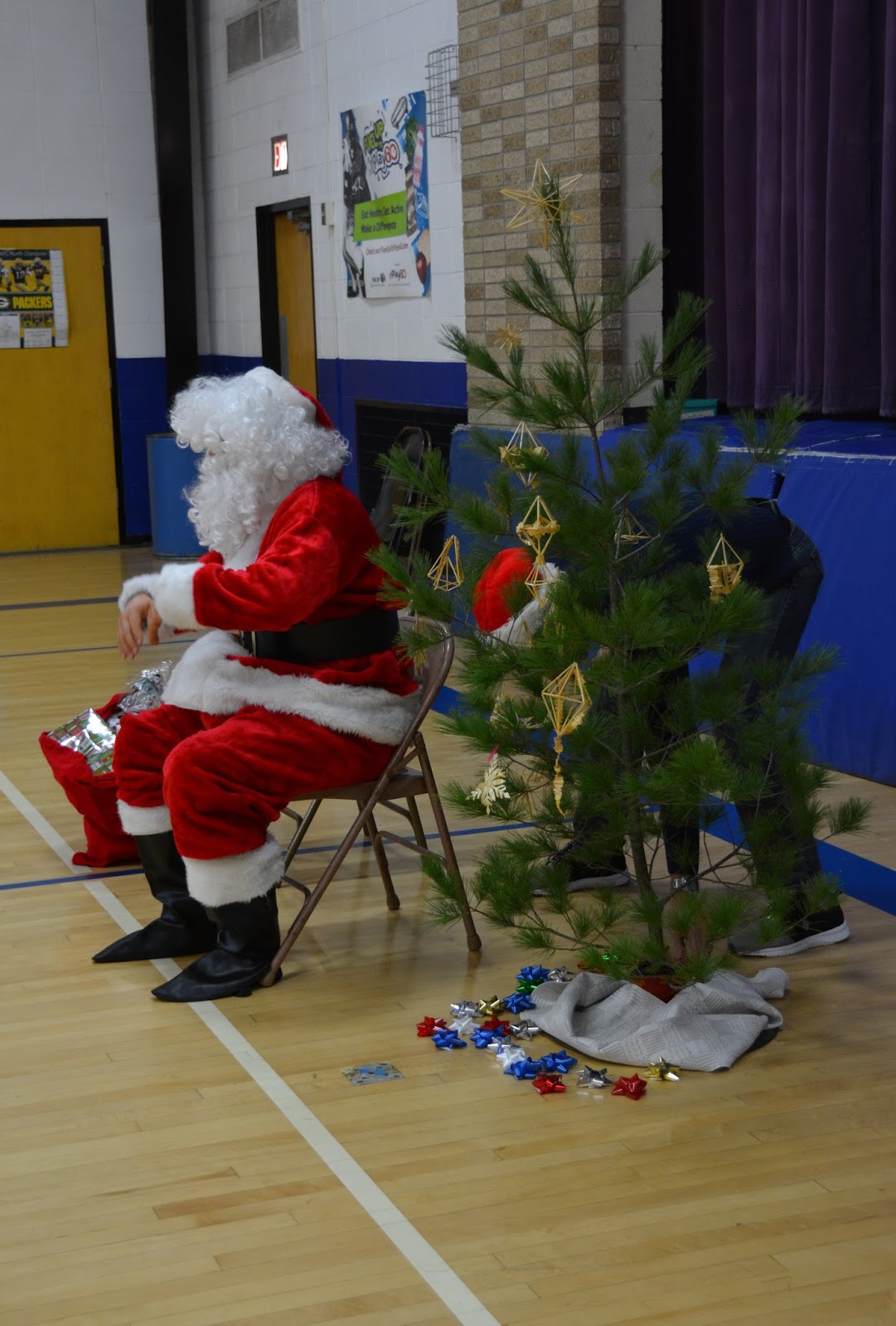
Madison, Wisconsin, December 12, 2015. This Santa was so good that even his children didn't recognize him.

*     *     *     *     *


Madison, Wisconsin, December 12, 2015. Santa had a tree decorated with straw ornaments.

*     *     *     *     *


Madison, Wisconsin, December 12, 2015. Finally, it's time for the gifts!

*     *     *     *    *


Madison, Wisconsin, December 12, 2015. Aww, bless.

*     *     *     *    *


Madison, Wisconsin, December 12, 2015. There's no free gift for the older children: each must recite a poem or perform a song before Santa passes along the prize.

December 24, 2013

December 30, 2012

The New Year's Eve Table

I wrote last year about some of the rigid food customs Lithuanians observe. Although the Kūčios traditions are the least flexible, other rules govern the every-day and holiday tables.

We observed some New Year's Eve guidelines. Guests usually arrived later in the evening—say between 8:00 and 9:00. The hostess served food at around 10:00 pm. The idea here was to keep people dining until midnight arrived so that the party wouldn't drag on and people wouldn't drink too much.

The New Year's Eve meal consisted of cold foods. This wasn't an attempt to lessen the hostess's load—like it was on the day of Kūčios. Instead, the cold meal acknowledged that the guests were eating a late-night "snack," not a substitute for dinner. The meal therefore focused on "užkandžiai," or what the Russians would call "zakuski" or "first courses."

My Mom and my paternal Grandmother, Tatjana, always prepared "New Year's Eggs" when it was our turn to host the party. Tatjana also made her "Babos Vinegretas." Because it was New Year's Eve, Tatjana decorated that salad with lump crabmeat. Sliced hams, roast beef, and lingonberries joined the table. We often also served "Košeliena," or pork head cheese (we served it, but I never ate it). Sometimes we had "Amerikoniškas Shrimp Cocktail;" I didn't like horseradish then, so I would not eat the cocktail sauce.

A day or so before New Year's Eve, Dad drove down to one of the Lithuanian bakeries in Marquette Park to buy sweets for the party. He'd pick up Poppy Seed Strudel, a Nut Strudel, perhaps a torte—if Tatjana didn't make her Nut Torte or her Pavlova Torte—and some chocolates. If we were feeling especially festive, Dad would head up to the North Side and bring back goodies from Lutz's Pastry Shop. A sweets table from Lutz's signaled good taste.


Suburban Chicago, December 31, 1968. Mom's coordinating the dessert course while Vytenis, the husband of Mom's best friend Donna, makes a clever toast.

December 25, 2013

Related by Marriage: A Lucky Dog

 
Verona, Wisconsin, December 24, 2013. Baci helps Mr. Irene's Parents start the Kūčios meal.

(Mr. Irene's Dad enjoys a Švyturys beer.)

December 23, 2011

Related by Marriage: Meet the Butcher

Mr. Irene and I visited an upscale grocery store today to pick up some additional items for our Kūčios table. We stopped at the meat counter to look at some of the unusual sausages for sale. While there, we asked the butcher whether he carried any potato sausages. A coworker asked the butcher what potato sausages were, and the butcher paused, explaining that they were a "Swedish" food. When Mr. Irene and I burst out that Lithuanians eat potato sausages too, the butcher laughed and told us that he, too, is Lithuanian.

It was nice to meet you today, butcher Paul. This post is for you.

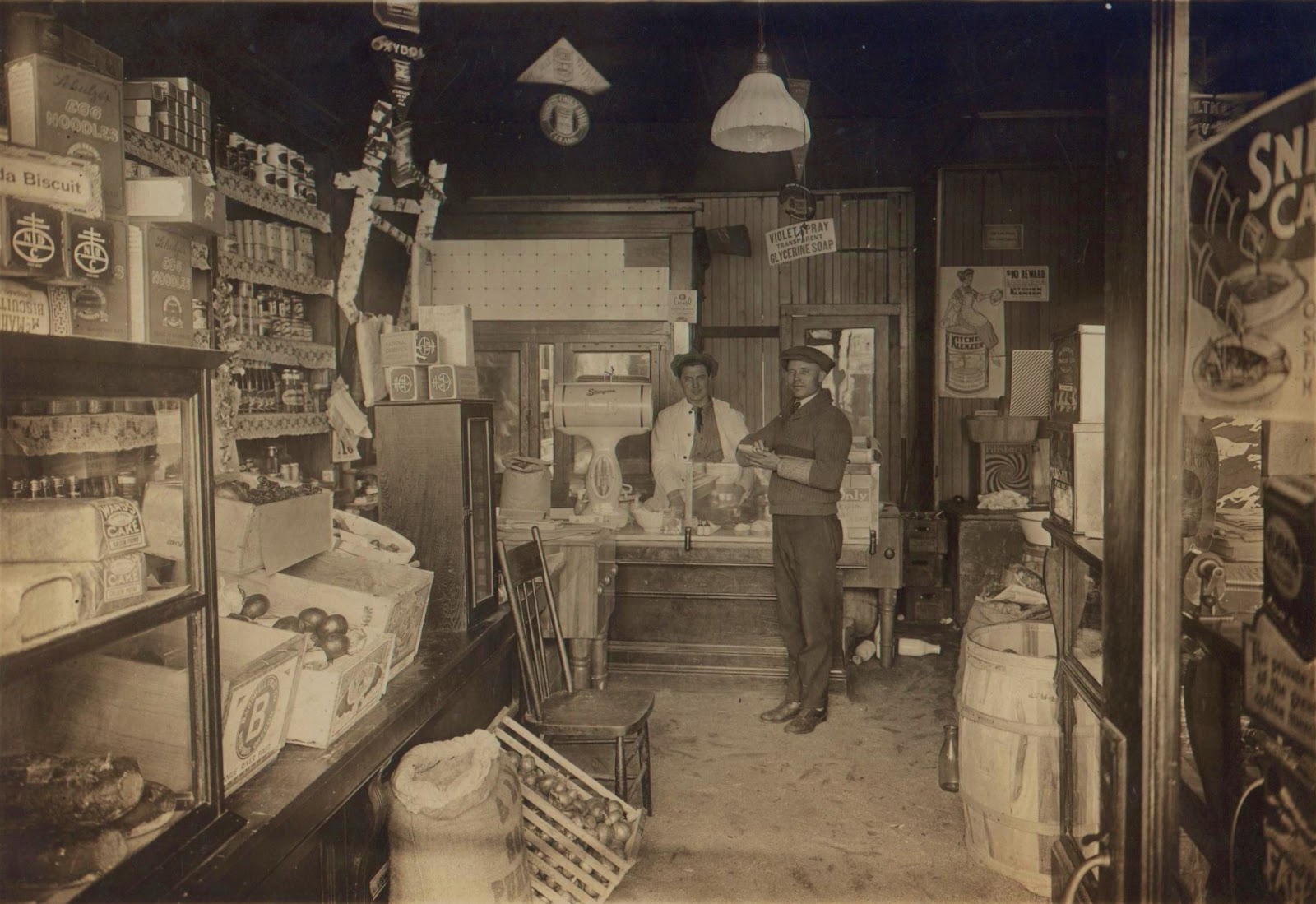
Mr. Irene's maternal Grandfather, Stanley, was a Lithuanian butcher. For a time, he ran a butcher shop and small grocery store in Brighton Park, near the intersection of 44th and Fairchild. He owned the place for about ten years, but it went under during the Great Depression. In the mid-1930s, Stanley began working for Benjamin Moore, which then had a plant on Chicago's South Side. When Benjamin Moore relocated its operation to suburban Melrose Park, Stanley continued to work for the company, commuting daily from his home in Marquette Park.

After Mr. Irene's Parents married, Stanley helped Mr. Irene's Dad get a job at Benjamin Moore. My Father-in-Law mixed paint at Benjamin Moore for over thirty-five years.

When Stanley retired from Benjamin Moore, he again worked as a butcher, this time on a part-time basis in a Marquette Park shop.


Brighton Park, Chicago, 1925. Mr. Irene's maternal Grandfather, Stanley, stands behind the counter of the butcher shop. The man on the counter's other side is a distributor, and the men posed for this photo to commemorate the distributor's visit.

Christmas Manners: The Cherished Gift

If you get a gift for Christmas that is exactly what you wanted, then show your joy by hanging onto the gift during dinner.


Suburban Chicago, December 24, 1966. Mom helps me out with some Kūčios choices. We are at my Godmother's elegant home. Santa Claus brought me this doll, which wears a pink, fleece onesie, because I expressed jealously after my Parents bought the identical doll for my Dad's Goddaughter. The instant I saw that doll, I wanted one. Santa obliged. I thought it was the most realistic doll I had ever seen.

December 3, 2012

The Christmas "Minejimas"

Our little, suburban Lithuanian School tried to commemorate holidays and national festivals as nicely as the bigger, Saturday school in Marquette Park did. But our suburban enclave had fewer children than the neighborhood populated by the Lithuanian core. As a result, our pageants, or "minejimai," were smaller—sometimes feeble—affairs. 

But they were nonetheless charming.


Melrose Park, Illinois, December 1967. We've practiced our steps. I'm on the left. It's likely that a potluck Kūčios followed the performance.

January 10, 2014

Imports

I've been following the Japanese knitters' love of fair-isle knitting (see here). Japanese knitters cherish all things "Northern." Japanese knitting books not only focus on fair-isle garments; many also highlight Canadian (Cowichan) knits, Aran or Irish knits, the traditional styles of Icelandic knitting, and various Scandinavian techniques.

I learned recently that a Hiroshima shop, "Little Lithuania," sells knitted and fabric garments produced in Lithuania. The shop's blog lingers on some cultural details; last month, the blog featured a post about Kūčios—Lithuanian Christmas Eve.

UPDATE: Here's an article (in Lithuanian) about the Japanese shop.

November 13, 2011

Eat like a grownup.

I mentioned earlier that Lithuanians, like many Europeans, entertain on Sundays.

My paternal Grandmother, Tatjana, loved to cook and socialize. She usually was the one who proposed having parties. My Mom often was less thrilled with the idea because she regularly was exhausted. Mom worked on Saturdays, and on Sunday mornings, she would do hospital rounds while Dad and I went to the zoo. When Mom returned from those rounds, she readied the house by dusting, cleaning bathrooms, and setting the dining room table for the mid-day party.

When the family hosted Sunday dinner, the children ate at a separate table in the kitchen. We sat at the dining table only on rare holidays, like Kūčios.

An easier entertaining alternative was to invite friends over for tea. We served tea in the living room, at the coffee table. Tatjana and Mom had special, embroidered tablecloths that they would use for the tea parties: "tea cloths." The guests would arrive in the late afternoon, and we would serve a variety of pastries. Tatjana often baked a yeasted coffee cake ("pyragas ant mielių"). I was disappointed by the yeast cakes because I wanted sweet, American cakes with heavy frosting and sugary flowers.

I nonetheless was thrilled when guests came to tea because I was not banished on those occasions to a children's table. My Parents instead allowed me to sit with the adults and eat like a grownup.

Even today, I love to entertain guests in the sunny living room. It's much more fun to graze around a coffee table than to eat at the dining table. If you've eaten at our coffee table, Mr. Irene and I hope you enjoyed the visit.


Suburban Chicago, April 1961. Mom, Tatjana, and I host Sunday tea. I sit in one of the painted chairs from the Rec Room play table. Mom has me dressed in red again, and she's wearing those red shoes!  There's little other color in the gray living room.

Mom tells me that red shoes were all the rage then.