Showing posts with label poetry. Show all posts

February 16, 2016

An Independence Day "Minejimas"

Today, February 16, is Lithuanian Independence Day. The holiday celebrates Lithuania's independence, in 1918, from the Russian Empire. Now, of course, there is a second Independence Day—a restoration day—marking the day Lithuania broke from the Soviet Union in 1991.

Lithuanians recognize both days. Traditionally, groups host a "Minejimas," or commemoration, filled with speeches, poetry recitations, music, and dancing

Here in Madison, Madison-Vilnius Sister Cities, Inc. organized a similar reception. We gathered at the Central Madison Public Library. We ate some goodies (I baked a Trupininis Pyragas), and then Nijole shared a presentation about the history of the Žaibas Dance Group. Žaibas this year celebrates its twenty-fifth anniversary.


Madison, Wisconsin, February 14, 2016. The library offered a beautiful room for the gathering.
 
*     *     *     *     *


Nijole created a display featuring items from Žaibas's history (yes, the group danced at a festival in Japan. And in Argentina).
 
*     *     *     *     *


Ah, "[w]e were so much younger then."
 
*     *     *     *     *


We chatted before the program.

*     *     *     *     *


We stood for the Lithuanian National Anthem. No one had an excuse for not knowing the lyrics.

*     *     *     *     *


Nijole began her presentation.
 
*     *     *     *     *

  
Current and former Žaibas dancers rose to applause.
 
*     *     *     *     *


Nijole spoke about the history of folk dancing, especially among the Displaced Persons living in postwar camps. You may have seen this photo earlier.
 
*     *      *     *     *


And this one, too.

*     *     *     *     *


We have a great group! 

January 20, 2016

December 13, 2015

The Madison Kūčios Celebration

Madison-Vilnius Sister Cities, Inc. and the Madison-area folk dance group, Žaibas, hosted its annual Kūčios gathering yesterday. It's a lovely event, and folks arrive from around the state to celebrate the occasion.


Madison, Wisconsin, December 12, 2015. Each table featured a plate of plotkelės.

*     *     *     *     *


Madison, Wisconsin, December 12, 2015. It's a potluck affair. I made Christmas Fish. (See menu items and recipes here and here and here.)

*     *     *     *     *


Madison, Wisconsin, December 12, 2015. We had several delicious herring dishes.

*     *     *     *     *


Madison, Wisconsin, December 12, 2015. That's my (first) plate. My favorite dish was the "Herring Under a Fur Coat."

*     *     *     *     *


Madison, Wisconsin, December 12, 2015. Santa arrives!

*     *     *     *     *


Madison, Wisconsin, December 12, 2015. Santa engages the children in the "Jurgelis Meistrelis" dance. Santa had push-ups on the mind.

*     *     *     *     *


Madison, Wisconsin, December 12, 2015. This Santa was so good that even his children didn't recognize him.

*     *     *     *     *


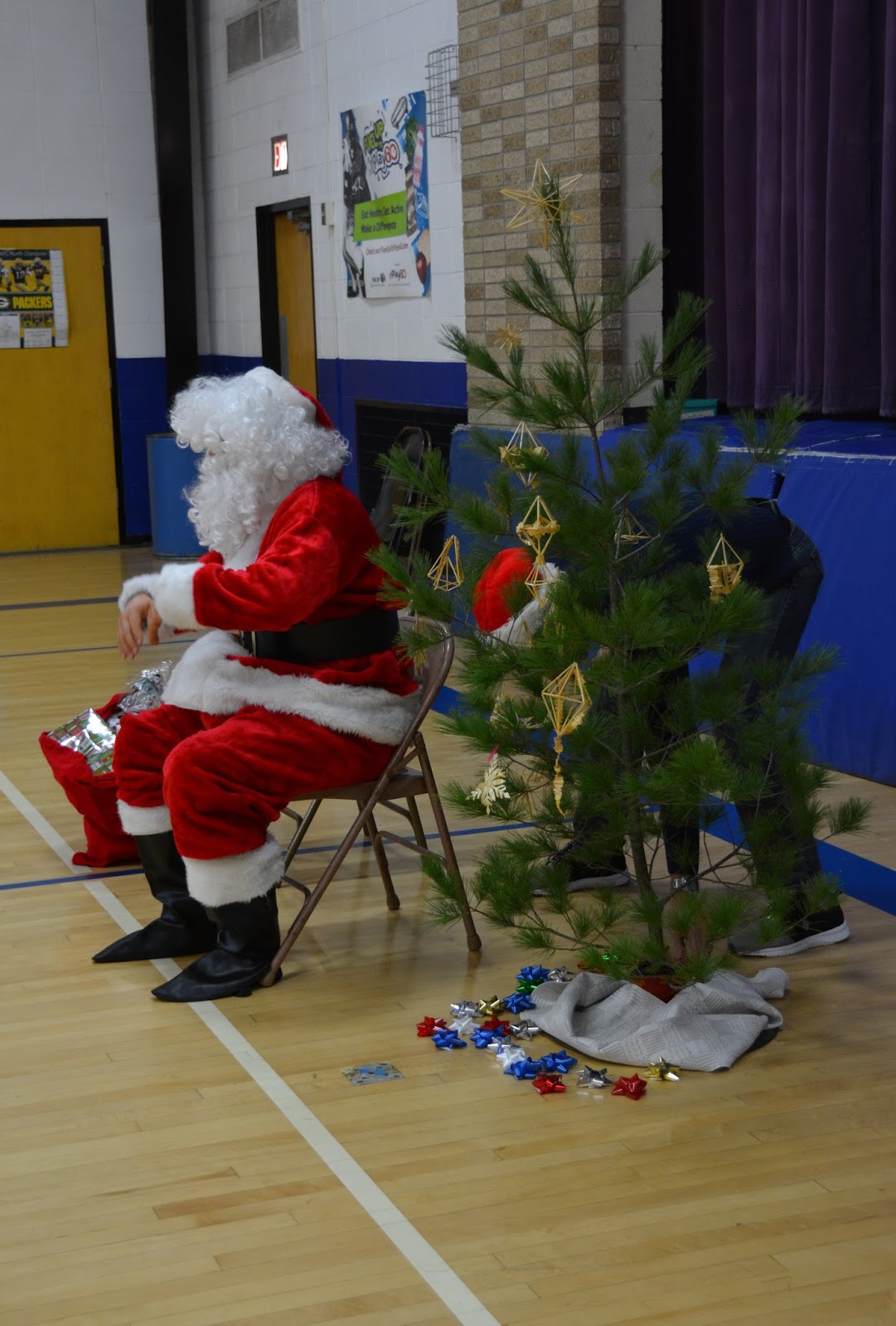
Madison, Wisconsin, December 12, 2015. Santa had a tree decorated with straw ornaments.

*     *     *     *     *


Madison, Wisconsin, December 12, 2015. Finally, it's time for the gifts!

*     *     *     *    *


Madison, Wisconsin, December 12, 2015. Aww, bless.

*     *     *     *    *


Madison, Wisconsin, December 12, 2015. There's no free gift for the older children: each must recite a poem or perform a song before Santa passes along the prize.

December 5, 2015

July 14, 2015

Class Notes (Part 13)


Kaunas, Lithuania, 1934. On this Class Notes page, my Mom's friend wrote:
For Memories

I have one rose
I give it to you

I have one friend
To her I give everything

From your friend N.

June 25, 2015

Class Notes (Part 11)


Kaunas, Lithuania, about 1934. On this Class Notes page, an army colleague of my Mom's Dad got his inspiration from a folk song:
Through the forest of pines
The sun began to shine.
Through the window's glaze
You gazed.

From Major J.

June 3, 2015

Class Notes (Part 9)


Kaunas, Lithuania, December 12, 1932. On this Class Notes page, my Mom's friend wrote:
For Memories.
I am not a princess, I have no riches
I have one heart, and that I gift to you.

Irene, your friend from school.

May 22, 2015

Class Notes (Part 8)


Kaunas, Lithuania, 1934. On this Class Notes page, my Mom's friend wrote:
For Memories!
I'm not a poet, verse I do not write
if you don't like that
then I apologize

Your friend E.

... A Secret
*     *     *     *     *


Kaunas, Lithuania, 1934. The "secret corner" reveals the penalty for peaking:
Whoever looks here
The horns of a devil must wear.

May 8, 2015

Class Notes (Part 7)

Many friends who wrote "remembrances" in my Mom's memento booklet used a then-common humor device. After a friend penned a sentimental note, she folded the bottom corner of the page. On the corner's edge, the friend wrote "Paslaptis," or "secret." When the reader unfolded the corner, she learned the concealed message only stated the penalty for her curiosity.
 

 Kaunas Lithuania, 1934. On this Class Notes page, my Mom's friend wrote:
For Memories!
My hand writes,
But it doesn't know for whom.
But the heart tells me
It's for beloved you.

From L.
 ... A Secret
 *     *     *     *     *


Kaunas, Lithuania, 1934. The "secret corner" reveals the penalty:
Mr. Secret.

Whoever looks here
On the back of a chick must ride.
(The message rhymes in Lithuanian.)

April 2, 2015

Class Notes (Part 6)


Kaunas, Lithuania, about 1934. On this Class Notes page, my Mom's friend wrote:
How pretty, how pretty
The garden of rue
Rue? Rue is considered a "national herb of Lithuania." When my parents built their cottage, they planted a bed of rue along one side of the house.

March 10, 2015

Class Notes (Part 5)


Kaunas, Lithuania, June 1932. On this Class Notes page, my Mom's friend wrote a poem:
For Memories!
I love one, I love two
I love the one that's pretty
But most of all I love you

December 13, 2014

Christmas Manners: Don't ask questions.


Bulger Park, Veterans Park District, Melrose Park, Illinois, December 1966. It seems ridiculous to be dressed as a mouse (or a rabbit) for a Christmas play. But I'm reciting a delightful poem.

(Was this costume the inspiration for the moose outfit?)

December 8, 2014

Earning gifts.


Melrose Park, Illinois, December 1960. The Lithuanian-school Santa Fake distributes gifts, but only after the children recite poetry, sing, or write on the chalkboard. Although I still was (a nose picker and) too young to attend the Saturday school, I did receive two gifts: Santa brought me a stethoscope and a doctor's bag.

November 7, 2014

Plaid Pants


Suburban Chicago, June 1975. Dad and his beloved Gigi visit my childhood bedroom. I was surprised to see Dad dressed this way. He had elegant taste, and he usually wore beautiful clothing. I don't know what happened here, but these style choices rattle my understanding of "stay-at-home" clothes.

On the top shelf rests a copy of National Geographic's dog book, Man's Best Friend. There also sits Watership Down (I didn't like that bookperhaps because I prefer nonfiction, and I don't care for fiction that is fantasy based) and The Gulag Archipelago. The books on the bottom shelf reflect an interest I had, at that time, in poetry.

October 21, 2014

Babos Receptai (Part 3)

My paternal Grandmother, Tatjana, was a Russian aristocrat. Her father, Pavel, served as one of Tsar Nicholas II's regional governors (Pavel also was a friend of Tolstoy's, but I'll leave that story for another day). Pavel was working in Omsk when Tatjana was born. Later, he served in Tambov. When the Russian Revolution erupted, the Bolsheviks executed Pavel and (we believe) one of Tatjana's brothers.

Tatjana's aristocratic roots crept through many corners of her life. She was proud of her lineage, and she drew sharp lines about what sort of behavior was appropriate for descendants of the noble class. For instance, before I went on my first "date" (an afternoon, picnic outing to Brookfield Zoo), she observed that only a prostitute would hold hands with a man in public.

Tatjana also, like other Russian aristocrats of her era, admired and monkeyed French culture. She insisted, for example, that I learn the French language, and she fluidly quoted French novels and poetry. Tatjana often spoke of Catherine the Great's mastery of French culture. Many years after Tatjana died, I worked with a fellow whose grandparents (or possibly great-grandparents) had found exile in Paris after the Russian Revolution. His experience made me wonder whether Tatjana wouldn't have been happier living in France.

Tatjana's love of French culture, however, did not influence her cooking. French food was rarely on the menu. The only French item Tatjana sometimes made was Pâte à Choux. When Tatjana made choux pastry, she usually filled the puffs with Jell-O Cook & Serve Vanilla pudding (because instant pudding is for unaccomplished cooks). When she made the filling from scratch, she used this recipe: 


Cooked Cream for "Petit Schout"
                        and for Napoleon

Melt one stick of butter with 2-1/2-3 tablespoons flour. Gradually pout in 1 cup milk and 1 cup half-and-half. Cook, mixing constantly (like you would for a white sauce), until everything is heated through and cooked.

Beat together 3 egg yolks with 3/4 cup sugar. Slowly mix this with the cooked cream mixture, and cook again, as you would ice cream, just until the mixture starts to show blisters. Then cool the mixture over ice, mixing well, and then adding vanilla, or orange rind, or almond extract.

[At the bottom of the page—in lighter colored ink—Tatjana added the recipe for the choux pastry:] 

Slowly heat 1 stick of butter and 2 spoonfuls (tablespoons) sour cream with 4-1/2 cups flour. Mix until the dough starts to hold together. Remove from heat and, mixing with your hands, divide the mixture into six pieces. Place in the refrigerator, then back at 400oF until the pieces are cooked through.