Showing posts sorted by relevance for query plotkelės. Sort by date Show all posts

December 17, 2012

Recipes in Translation

Preparations for our little Kūčios are under way. I searched today for plotkelės ("Opłateki" in Polish) at our local Russian store. The shopkeeper had never heard of them; I suppose it's not a Russian Orthodox tradition. She looked at me as if I were speaking Greek when I described the wafers.

I also am tweaking the "Christmas Fish" recipe. This is a preparation of a white fish and sliced onions layered in a thick tomato sauce. It's served cold, like the other foods we eat on Christmas Eve. I've made it for many years, but I have not been satisfied with my recipe, especially after tasting two delicious variations served recently at our local, Madison Kūčios. I've received a couple of recipes to try, and a search today revealed our "Christmas Fish" is a close cousin to Poland's "Fish in the Greek Style." Who knew!

Every Kūčios, Mom and I prepare two "Vinegretai," or mixed vegetable salads. One is a "pink" salad made with beets and navy beans. The other is a "white" salad made with potatoes, peas, and carrots. Our family always called the latter "Babos Vinegretas," or "Grandma's Salad," in honor of my Russian-born, paternal Grandmother, Tatjana. When I moved to Venice in the early 1980s, I noticed that most delicatessens carried a dish that looked identical to "Babos Vinegretas." The Italians call it "Insalata Russa," and it's a modification of a classic Russian dish, "Salat Olivyeh." Iranians make "Salad Oliveh," too. Sources attribute the recipe to a nineteenth-century French chef who lived in the Russian empire. Ah! I had thought Tatjana was the genius behind the dish.

This year, we also will be making a spicy carrot salad, "Aštrios Morkų Salotos." I stumbled on the dish when I bought this product (scroll down to the fourteenth jar on the page) at our Russian store. The salad is identical to a spicy carrot salad that the Russians call Korean Carrots. Russians incorporated the dish into their cuisine after those Koreans deported by Stalin began living in the western Soviet Union. Today, every Russian grocer carries Korean Carrots. At our shop, you can buy the bottled salad (made in Lithuania), a fresh salad in the deli case, or a spice packet to make the salad at home.

That got me back to thinking about the Napoleonas, the torte French pastry chefs adapted from Lithuanian bakers.

Lithuanians, Poles, Russians, Greeks, Italians, Iranians, Koreans, French: it's all one big table.


Verona, Wisconsin, March 2011. The "pink" salad of beets and beans is on the menu. (Photo by Laurence Meade.)

UPDATE: I've corrected a grammatical error in the first paragraph. *Blushes.*

December 13, 2015

The Madison Kūčios Celebration

Madison-Vilnius Sister Cities, Inc. and the Madison-area folk dance group, Žaibas, hosted its annual Kūčios gathering yesterday. It's a lovely event, and folks arrive from around the state to celebrate the occasion.


Madison, Wisconsin, December 12, 2015. Each table featured a plate of plotkelės.

*     *     *     *     *


Madison, Wisconsin, December 12, 2015. It's a potluck affair. I made Christmas Fish. (See menu items and recipes here and here and here.)

*     *     *     *     *


Madison, Wisconsin, December 12, 2015. We had several delicious herring dishes.

*     *     *     *     *


Madison, Wisconsin, December 12, 2015. That's my (first) plate. My favorite dish was the "Herring Under a Fur Coat."

*     *     *     *     *


Madison, Wisconsin, December 12, 2015. Santa arrives!

*     *     *     *     *


Madison, Wisconsin, December 12, 2015. Santa engages the children in the "Jurgelis Meistrelis" dance. Santa had push-ups on the mind.

*     *     *     *     *


Madison, Wisconsin, December 12, 2015. This Santa was so good that even his children didn't recognize him.

*     *     *     *     *


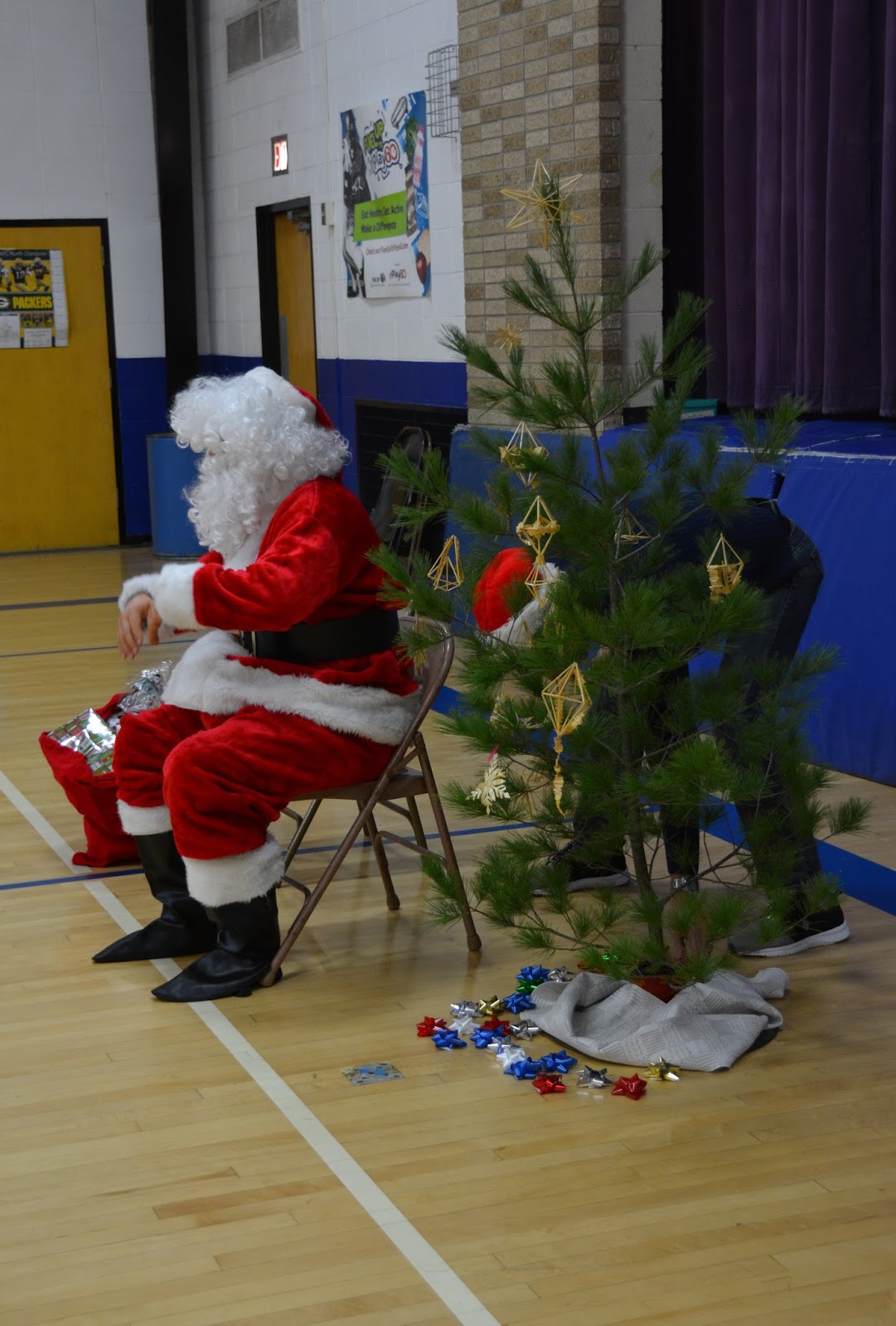
Madison, Wisconsin, December 12, 2015. Santa had a tree decorated with straw ornaments.

*     *     *     *     *


Madison, Wisconsin, December 12, 2015. Finally, it's time for the gifts!

*     *     *     *    *


Madison, Wisconsin, December 12, 2015. Aww, bless.

*     *     *     *    *


Madison, Wisconsin, December 12, 2015. There's no free gift for the older children: each must recite a poem or perform a song before Santa passes along the prize.

December 24, 2012

Empty-Nester Kūčios

My Parents celebrated Kūčios alone in 1983. I lived in Venice that year, and I did not travel home to the States for the holiday. Chicago also experienced a record cold spell during Christmas week, and other family members were not able to spend Kūčios with my Mom and Dad. Many people didn't want to leave their homes for fear that the power would go out and water pipes—especially in homes with hot water heat—would freeze.


Suburban Chicago, December 24, 1983. Mom and Dad start Kūčios by breaking the plotkelės.

*     *     *     *     *


Suburban Chicago, December 24, 1983. Meškė joins Mom and Dad at the Kūčios table.

December 10, 2012

An Early Kūčios, with Friends

Mr. Irene and I were delighted recently to have been invited to a lovely Kūčios potluck. Madison-Vilnius Sister Cities, Inc. and the Lithuanian folk dance group with which we used to perform—Žaibas—hosted the event.


Madison, Wisconsin, December 2012. Each table featured a plate of plotkelės that diners shared before the meal.

*     *     *     *     *


Madison, Wisconsin, December 2012. The spread included nearly every traditional Kūčios dish: herring, mushrooms, "Vinegretai," "Christmas Fish" (two ways!), smoked fishes, and Lithuanian bread.  (Compare our Kūčios table from last year.)

*     *     *     *     *


Madison, Wisconsin, December 2012. After dinner, Santa Claus arrived with gifts for those children who were ready to sing, play an instrument, or recite a poem.

*     *     *     *     *


Madison, Wisconsin, December 2012. Santa broke into a swoosh of Jurgelis Meistrelis moments after he arrived.

*     *     *     *     *

Do you want to learn more about Kūčios? Check out these posts.

December 23, 2014

We break bread.


Suburban Chicago, December 24, 1961. My Dad's twin sister, Jonė, and her family—husband Kadis and daughter Toronto Cousin—spend Christmas with us. The family engages in the tradition of breaking plotkelės before the Christmas-Eve meal, Kūčios. We also place a plotkelė on each dish.

December 24, 2011

Lithuanian School

The Lithuanians in our suburb ran a Saturday school. Our school was not as ambitious as the Saturday schools that arose in areas with substantial Lithuanian populations. It was "Lithuanian School Light." Parents—some trained as teachers, and some not—staffed the school. The school work was not rigorous. Although all of us were fluent in the language, many of us graduated with primitive writing and reading skills.

I remember Lithuanian school as a place where I skirted my lessons, rarely concentrated, and acted out in ways I wouldn't dream of in regular school. I dreaded Lithuanian school. It seemed crazy that I had to go to school on Saturday when all of my American friends got to play on that day.

Mr. Irene didn't have to go to Lithuanian school. He was "exempt." That's a story for another day.

The Lithuanian school rented classroom space from our parish school. Classes took place in the morning in the school's old building. In the afternoon, we headed down to the building's dank basement, where we engaged in the cultural portion of our school day. We learned to folk dance, sing, and—yuck—recite poetry.

There were some enjoyable things about the school. I cemented a few lifelong friendships there. Once a month or so, the parents and teachers treated the children to a lunch of hot dogs and Lay's potato chips after we'd finished our cultural lessons. The school also sponsored a picnic every June.

The best part about Lithuanian school, however, was the annual Christmas pageant.


Melrose Park, Illinois, December 1963. I recite a poem for Santa and the audience. I wear a red velveteen jumper that my Mom sewed. It had white snowflake appliqués around the neckline.

*     *     *     *     *


Melrose Park, Illinois, December 1963. My Mom, fourth from left, enjoys some coffee and cookies with the other adults as they watch our show.

*     *     *     *     *


Melrose Park, Illinois, December 1963. Even the principal of the parish school, Sister Patricia, attends the show. Father Stanley, a Lithuanian priest, appears to be passing out plotkelės that the families take home for the Kūčios celebration.

*     *     *     *     *


Melrose Park, Illinois, December 1963. Finally, a Santa Fake presents my gift.

*     *     *     *     *


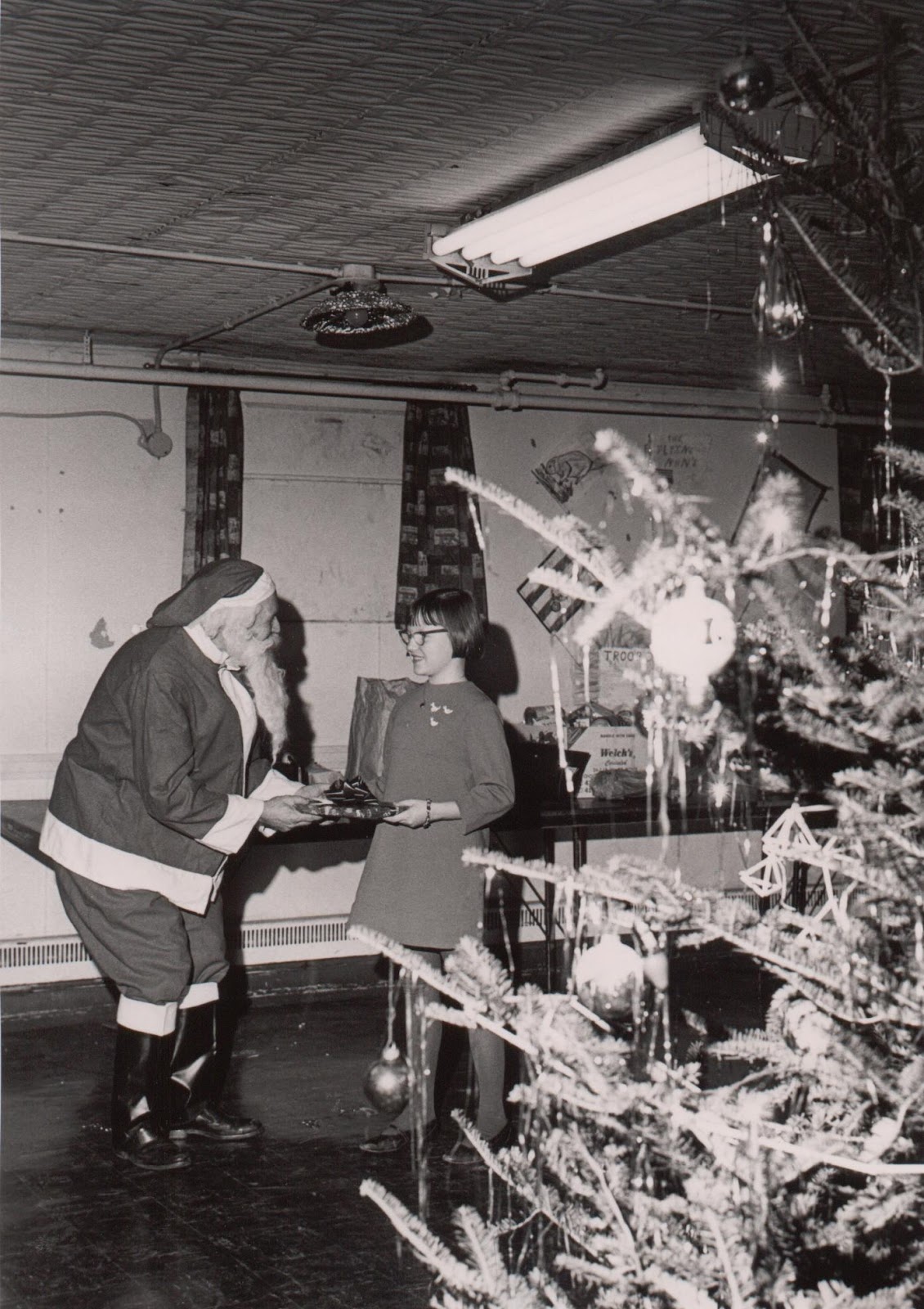
Melrose Park, Illinois, December 1966. This pattern continued for many years. Here, I wear a home-sewn blue dress with duck appliqués.